Tree Surgery for Hospitals and NHS Sites
Live-site tree surgery for hospitals across County Durham and North Yorkshire. Helipad and ambulance route clearance, ward-side working, permits and RAMS.
Send the site plan, tree positions, helipad and ambulance route locations, the wards next to the work and the name of whoever holds the grounds contract. We’ll build the method round the constraints.
What our customers say
“I was recommended Ross to cut down and trim a large conifer hedge.”
“He came out quickly after getting in contact to assess what needed doing and provide a quote.”
“Very professional and educated me what was the best way to do the job.”
“He was quick, efficient and did a great job of clearing away.”
“Will definitely be using again and recommending to others.”
- NPTC qualified
- LANTRA qualified
- £10M public liability insurance
- Constructionline Gold certified
- RAMS as standard
Tree surgery on a hospital site that can’t close
We assess hospital tree work around ambulance access, occupied wards and the site’s permit-to-work requirements.
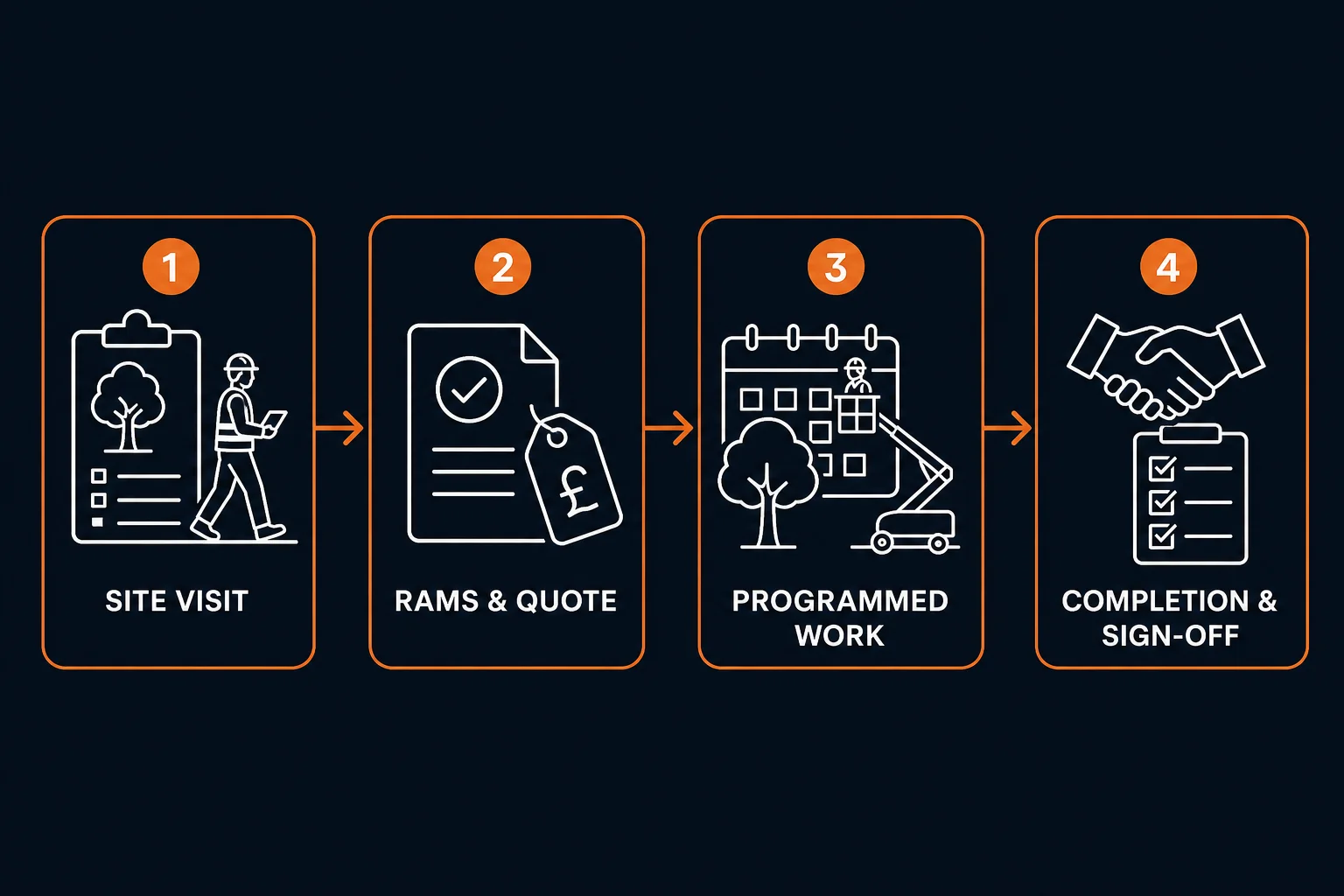
Send the site address, the trees involved and your estates or facilities contact. We’ll discuss the working area, permitted hours and any restrictions before preparing the quote.
Helipad approaches and ambulance routes
Trees near the pad, and what downwash does to deadwood
For trees near a helipad, we need the operating restrictions and clearance requirements from estates or the pad operator. These determine whether the proposed work is suitable and when it can take place.
Deadwood and loose branches, timber or chips need particular attention near an operating pad. Clearance, communication and stand-down arrangements must be agreed with the operator before any work is accepted. We do not provide aviation clearance certification.
Blue-light entrances and sightlines
Branches over ambulance entrances and hedges obscuring sightlines need a method that protects emergency access. We discuss the working area and any short closures with the responsible site contact. If access cannot be maintained or an alternative agreed, the work cannot proceed as planned.
What the work covers
- Sightline and access clearance
- Helipad approach clearance, ambulance route and canopy clearance, entrance sightlines, and clearance from signage, lighting columns and CCTV.
- Ward-side crown work
- Deadwood removal, crown reduction and crown lifting alongside occupied buildings, worked in short sequences to suit the wards below.
- Removals next to live buildings
- Sectional dismantling where there’s no drop zone and the building stays occupied. See tree removal.
- Inspection cycles and records
- Documented inspection for a site with continuous public access. See tree safety inspections and commercial tree maintenance.
Working alongside occupied wards
Noise, fumes and the hours a ward can give you
Tell us which wards are affected, when noisy work is permitted and where windows or air intakes face the trees. We assess equipment positions, noise and exhaust controls against those restrictions before confirming the method and price.
Privacy at the window
Work beside ward windows needs advance coordination with the ward manager to protect patient privacy. Any photography restrictions must be included in the site brief.
What infection control needs to know before the chipper starts
Chipping, stump grinding and disturbance of soil or decaying wood can create dust and spores. The hospital’s infection prevention and control team must decide what controls are required near sensitive areas. We provide details of the proposed work so the site can assess it before approval.
Secure and mental health inpatient units
The clinical and security teams set the requirements for secure courtyards and boundaries. Access, tool control, removal of cut material and any changes to climbable branches must be agreed before booking. Ross is not DBS checked; if your contract requires a check or clearance we do not hold, we cannot accept the work on that basis. See our qualifications and eligibility information.
Permits, buried services and stump grinding
Send the permit-to-work and handback requirements with the site brief. Fire exits, muster points and access to hydrants must remain protected throughout the work.
Before stump grinding, buried services must be identified and a safe working depth established. We need estates drawings and suitable service-location checks, with any specialist investigation agreed separately. If a safe method cannot be established, the stump must be left until it can.
Car park and boundary trees
We assess car park and boundary trees for deadwood, clearance and suitable pruning. If bays need to be taken out of use, the hospital or car park operator must agree the closure and notices before the work is booked.
Who actually holds the grounds contract
If an FM provider manages the grounds contract, include their contact details so we can confirm the approval and reporting requirements.
What drives the price on a hospital site
The price reflects tree size and condition, access, equipment and the hospital’s working restrictions. Short work windows, out-of-hours arrangements, closures and permit requirements can add time. We set these out in the written quote. See commercial tree surgery and tree surveys.
What isn’t included
Helipad obstacle surveys, aviation clearance certification, ecology and bat surveys, ground investigation, service location beyond a standard scan, traffic management and drainage work aren’t included. We don’t carry out the infection-control assessment and we don’t authorise our own permits. Grounds maintenance, mowing and planting are separate services. Ash on hospital boundaries is common here and is quoted as tree work. See ash dieback removal.
Commercial cover. NPTC and LANTRA qualified. Constructionline Gold certified. £10M public liability insurance. We confirm required RAMS, permits and handback documents with estates or the FM provider before accepting the work.
What customers ask
Common questions
Can you work while the hospital stays open?
We assess whether the work can be carried out with agreed exclusion areas while protecting emergency access and occupied wards. The hospital must approve the method, working hours and permits before a date is confirmed.
How do you work near a helipad?
We need the restrictions and clearance requirements from estates or the pad operator first. The operator must agree debris controls, communication and stand-down arrangements before work can be accepted. We do not provide aviation clearance certification.
Our hospital is a PFI site. Who would we be contracting with?
Include the contact responsible for the grounds contract, usually your estates team or FM provider. We confirm who can approve the work and which procurement, permit and reporting requirements apply before quoting.
Can you work at night or at weekends?
Tell us the permitted hours and we’ll confirm availability and any additional cost. Night work may not be suitable near occupied wards, so the timing must be agreed with the hospital.
Can you grind stumps on a hospital site?
Only where buried services have been identified and a safe method and depth established. We need estates drawings and suitable service-location checks. If the information is insufficient, grinding must wait rather than risk damaging a service.
Discuss a live hospital site
Send the site plan, tree positions, helipad and ambulance route locations, the wards next to the work and the name of whoever holds the grounds contract. We’ll build the method round the constraints.